Plow Pose, also called Halasana, is an intermediate yoga inversion where your legs move overhead toward the floor. Because the position places your neck, shoulders, and spine in a demanding arrangement, comfort and control matter more than reaching your feet to the mat.
You’ll learn the benefits of Plow Pose, how to set it up correctly, beginner modifications, breathing tips, and key safety precautions. Start by understanding the proper alignment and preparation for the pose.
What Is Plow Pose and What Does It Do?
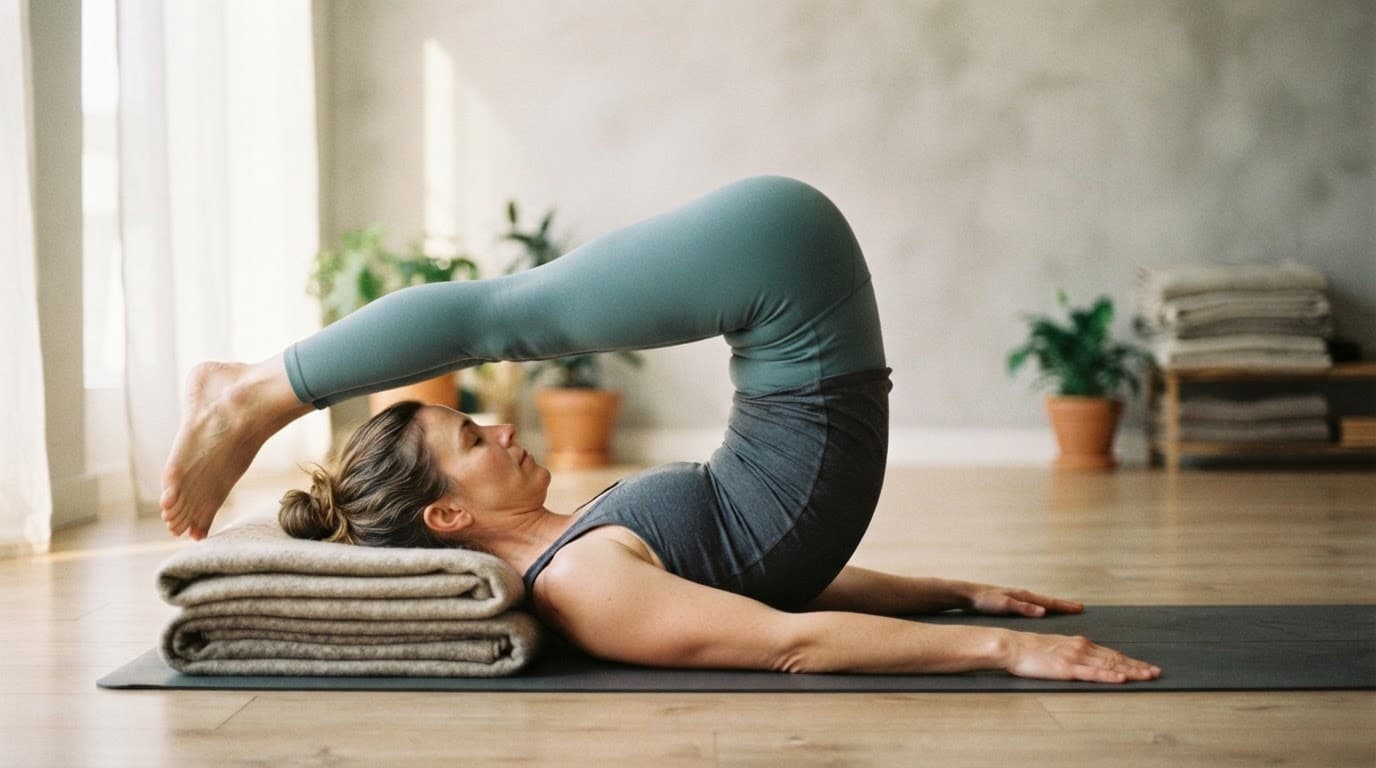
Plow Pose, or Halasana, is an intermediate yoga inversion where your legs travel overhead toward the floor behind you. The pose extends the back body while your shoulders and upper back support much of your weight.
Halasana can feel challenging because it combines balance, hamstring flexibility, spinal movement, and precise neck positioning. Beginners may also feel disoriented when their legs move out of sight. Use props and move slowly rather than forcing your feet to reach the mat.
The Main Benefits of Plow Pose
With steady practice, Plow Pose can help you notice how your shoulders, spine, hips, and legs work together. That improved body awareness can make alignment easier to recognize in other yoga poses.
The posture also provides a gentle stretch through the hamstrings, back, shoulders, and the muscles along the spine. Some practitioners find that its tucked shape encourages slower breathing and a focused, inward feeling. However, flexibility develops over time. You shouldn’t pull, bounce, or force your feet toward the floor.
Halasana also asks your postural muscles to work as you stabilize your body and maintain control. These muscles include the core, upper back, and shoulders. Strength and control improve gradually through consistent practice, not by holding the pose longer than your body can manage.
A well-supported Plow Pose should create a sense of length, not sharp pain or pressure in your neck.
Keep your neck relaxed and avoid turning your head once you’re in position. Anyone with neck concerns should get individual guidance before practicing inversions. A detailed anatomical explanation of Shoulder Stand also shows why shoulder and neck alignment deserve careful attention in related poses.
How Plow Pose Differs From Shoulder Stand
Shoulder Stand keeps your legs pointing upward, with your body stacked more vertically over your shoulders. In Plow Pose, your legs lower overhead toward the floor, so your hips move behind your shoulders and your spine flexes more noticeably.
Both poses require stable shoulders, a supported upper back, and a neutral neck position. Practitioners often move from Shoulder Stand into Halasana as a transition or use Plow Pose as a follow-up posture. Still, that connection doesn’t make either pose suitable for every student.
Build the needed strength, mobility, and balance with instruction before attempting either inversion. If you feel neck pain, numbness, tingling, or strong pressure, come out carefully and choose a simpler alternative.
How to Practice Plow Pose Step by Step
Practice Halasana on a clear surface with enough room behind your head. A folded blanket under your shoulders can create space for your neck, while your head rests on the mat.
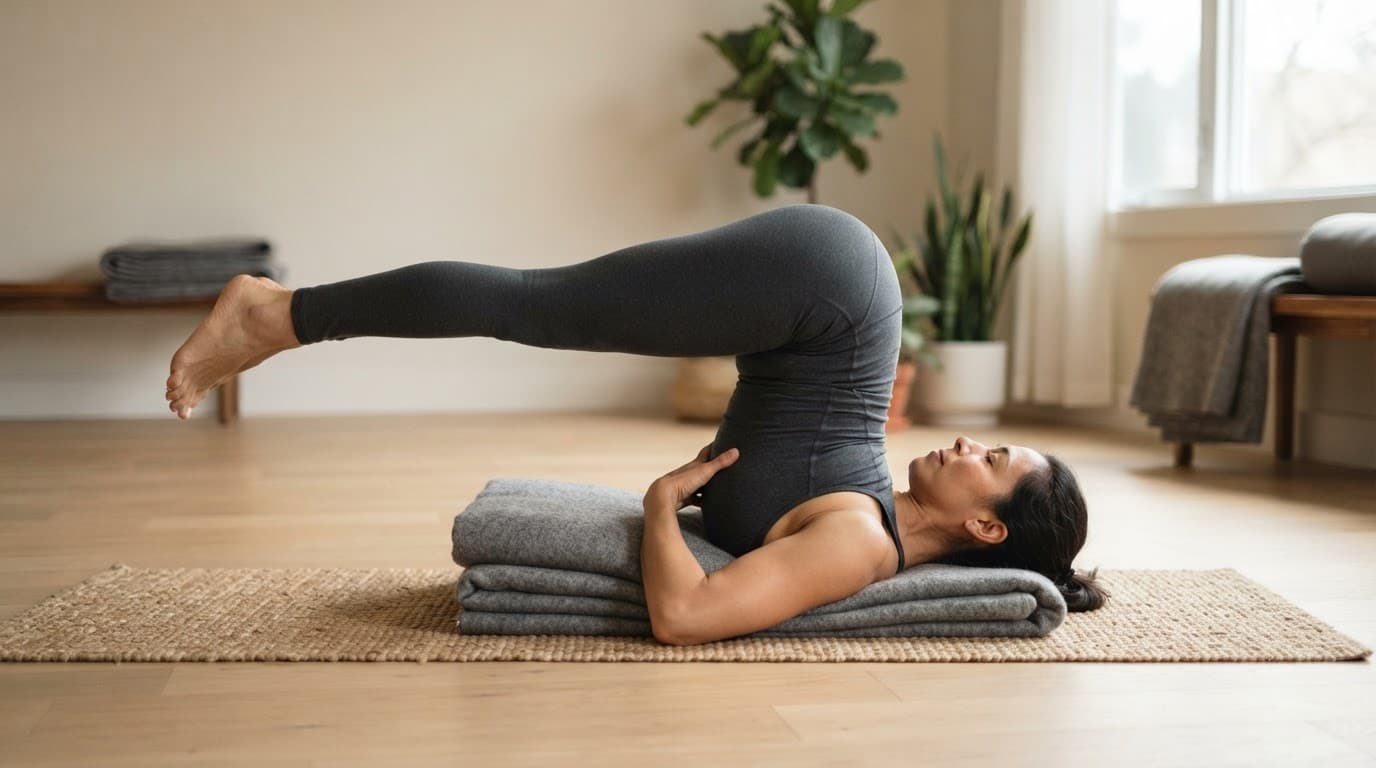
- Lie on your back with your arms beside you and your palms facing down. If you’re using a blanket, position it under your shoulders and upper arms, not under your head.
- Bend your knees and lift your legs slowly. Engage your abdominal muscles as your hips rise away from the floor.
- Support your lower back with your hands. Keep your elbows close together and avoid placing pressure on the back of your neck.
- Move your legs overhead only as far as you can control. Your feet may hover above the floor, rest on a chair, or reach the mat. Your toes don’t need to touch the floor for the pose to be effective.
- Keep your neck still and look straight up. Your chin may move naturally toward your chest, but don’t force your neck into a deeper bend.
- Stay for a few comfortable breaths, then lower your spine slowly. Keep your hands supporting your back as your hips return to the mat, and avoid rolling onto your neck.
For additional alignment guidance, review Yoga Journal’s Halasana instructions before practicing without support.
Alignment Cues That Protect Your Neck and Back
Keep your weight on your shoulders and upper arms rather than pressing into the cervical spine. Your shoulders should remain grounded, and your elbows should point toward the floor as your hands support your back.
Once your legs move overhead, don’t turn your head to look around. Controlled movement matters at every stage, especially when you enter and exit the pose. Stop immediately if you notice sharp pain, numbness, tingling, dizziness, or trouble breathing. Return to your back slowly, using your hands and core instead of dropping your legs.
Breathing and Holding Time
Breathe slowly and evenly through your nose when possible. Beginners can hold Plow Pose for only a few comfortable breaths, then add time gradually as control improves.
Avoid holding your breath, straining, or forcing your feet toward the floor. Those actions increase tension and can make it harder to maintain steady support through your shoulders and back. A shorter hold with smooth breathing is safer and more useful than a long hold that leaves you struggling.
Prepare for Plow Pose With Safer Warm-Ups and Modifications
A short warm-up helps your body handle Halasana with better control. Prepare the hamstrings and hips with gentle leg raises, reclining hand-to-big-toe pose, or supported forward folds. Shoulder rolls and gentle upper-back movements help you organize the support needed around your shoulders.
Your core also needs to engage as your hips lift from the floor. Try a few slow bent-knee marches while lying on your back, then rest before attempting the inversion. Move gradually, and treat props as useful equipment rather than signs that you are doing a lesser version of the pose.
Beginner-Friendly Plow Pose Modifications
Place a folded blanket under your shoulders and upper arms, keeping your head on the floor and leaving enough space for your neck to move comfortably. The blanket should lift your shoulders, not push your head forward. Never place your weight directly on the top of your head.
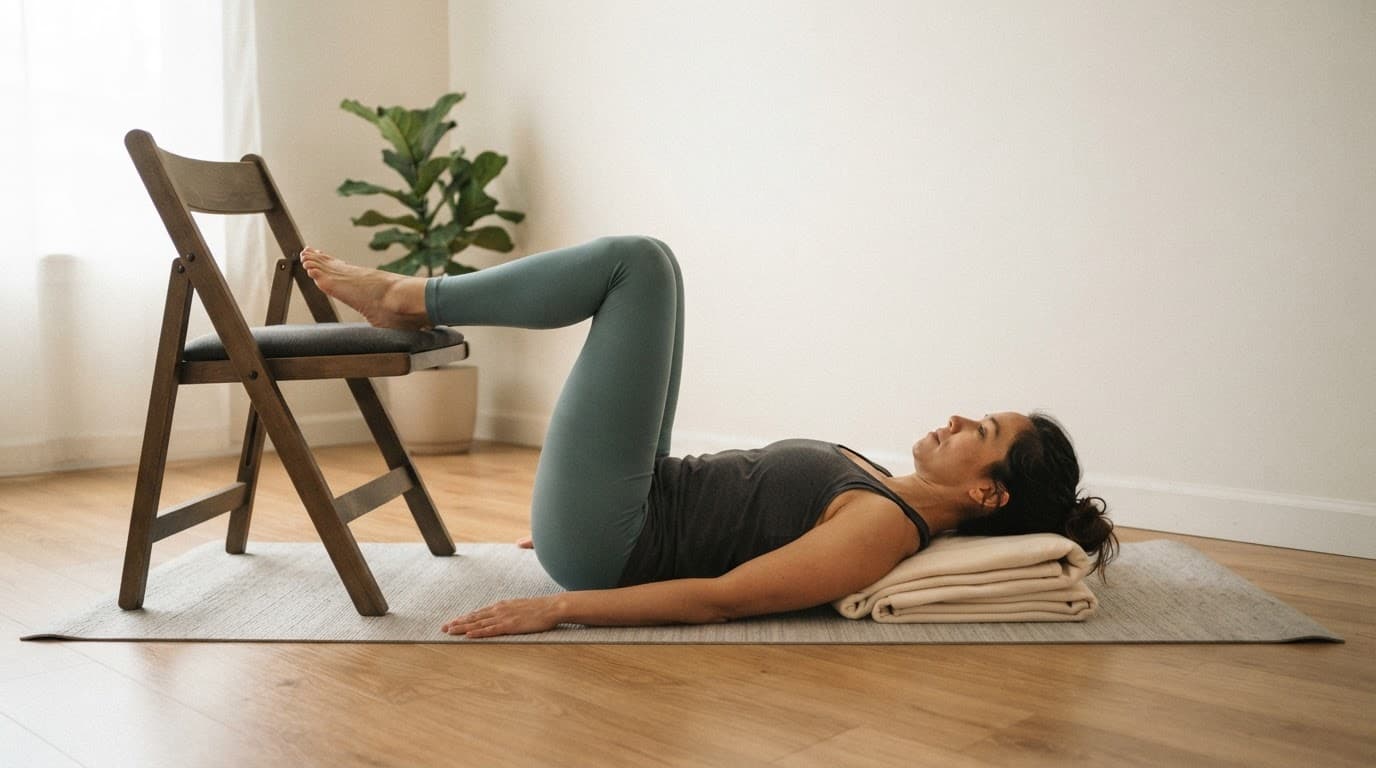
A wall can provide support when you lift your legs. You can also place a sturdy chair behind your head and rest your feet on the seat instead of lowering them toward the floor. Keep your knees bent if straight legs create pulling in your hamstrings or pressure in your back.
Stopping with your legs at an angle is a complete practice option. Your hips can rise slightly while your feet remain above the floor. If you have neck or back concerns, review these Halasana precautions and get individual guidance before practicing.
For an even gentler alternative, practice Legs Up the Wall. Lie on your back with your legs supported vertically by a wall, then keep your head and spine relaxed on the floor.
Helpful Counterposes After the Inversion
Ease out of Plow Pose slowly, lower your spine with control, and rest flat on your back for several breaths. Let your neck return to a neutral position before adding movement.
Next, draw your knees toward your chest without pulling on your head or neck. You can also keep your feet on the floor and pause with your spine neutral. If your body feels comfortable, try a gentle bridge preparation by pressing through your feet to lift your hips only a few inches.
A supported fish variation may feel appropriate after practice, but skip it if your neck feels tight or sensitive. Counterposes should release tension, not force the neck into a strong bend or twist. Stop if you feel pain, tingling, dizziness, or pressure in the cervical spine.