A watch can look perfect at home, then feel wrong the moment your trip shifts from coffee stop to dinner reservation. The wrong one pulls at your cuff, feels too sporty at dinner, or makes you worry every time it rains.
A good travel watch should cut decisions, not add more. When one piece has the right mix of comfort, durability, and style, you don’t need to pack a backup. Size, water resistance, strap choice, and easy readability matter more than flashy details. A good one should move from airports to meetings to dinner with almost no thought.
What makes a watch useful for both travel and daily wear?
The best all-round watch isn’t the flashiest one in the box. It is the watch you can wear through security, a long walk, a work meeting, and a nicer dinner without feeling underdressed or overdone.
That balance matters because travel puts your routine under pressure. You want something practical enough for motion and weather, yet clean enough for daily life. Price matters, but versatility matters more. If a watch only works with one outfit, it is not doing enough.
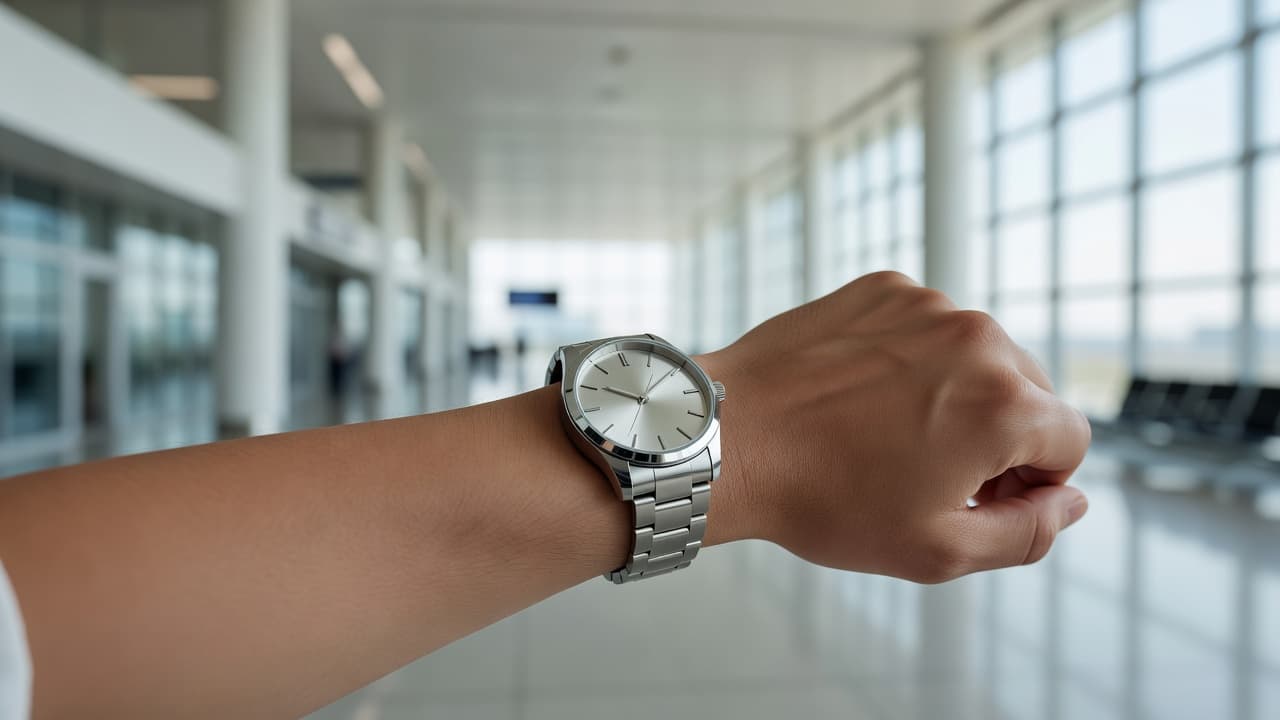
Choose a style that feels right in more than one setting
Simple design usually wins. A clean dial, a round or softly angular case, and restrained colors like black, blue, white, or silver pair well with jeans, chinos, and a jacket.
Highly polished dress watches can look too formal by day. On the other hand, oversized sport models may clash with business clothes. Avoid fussy bezels and crowded subdials if your goal is broad use.
Focus on comfort for long days and long flights
Comfort decides whether you wear the watch or leave it in the hotel. A slim case slides under a cuff, feels lighter on the wrist, and won’t dig in during a flight.
Also pay attention to strap feel. Stiff leather and heavy bracelets can wear you down after hours of walking. Weight distribution matters as much as total weight, especially on metal bracelets. When a watch disappears on the wrist, that is a good sign.
The features that matter most when you are away from home
Travel exposes weak points fast. Rain, sweat, crowded trains, hotel sinks, and rushed mornings all test a watch more than a normal office day. That is why a few basic features matter more than rare complications.
You do not need every function on the spec sheet. Most people are better off with strong water resistance, a tough case, easy strap options, and a dial they can read at a glance.
Water resistance and durability for real-world use
A travel watch should handle the small messes of real life. Handwashing, sudden weather, and a splash by the pool should not feel risky. For most people, 100 meters of water resistance is a comfortable target. The Bluffworks guide to travel watch features also points to the same idea, practical specs matter more than novelty.
Case material matters too. Stainless steel is a safe pick because it balances toughness, price, and appearance. Titanium feels lighter, which helps on long trips, but it often costs more.
A strap or bracelet that is easy to live with
Straps change the whole watch. Leather looks sharp, but heat and water can wear it out fast. Rubber and fabric feel casual, yet they are easy to clean. A metal bracelet splits the difference, especially if it has good micro-adjustment.
Quick-change straps add real value. One watch on a bracelet can handle daytime touring, then switch to leather for dinner without taking a second watch.
Readability, size, and time zone features
A watch should be easy to read while moving. Clear markers, good contrast, and simple hands help more than a busy dial ever will. Modest lume also helps on early flights or dim streets.
Size matters as much as looks. Many wrists do well with a case around 36 to 40 mm because it stays balanced and works with more outfits. If you cross time zones often, a date display or dual-time function can help. Still, simple layout should come first.
How to match one watch to your travel habits and personal style
The right watch depends on how you travel most often. A frequent flyer who wears a blazer has different needs than someone who packs sneakers and a rain shell for weekend breaks.
Start with the clothes and places that show up again and again. Your best watch should fit your real routine, not a fantasy trip you take once every few years. Your wrist size also matters, because a watch that looks balanced at home should still feel balanced after a full day out.
Pick a watch that fits your most common trips
City travel usually favors a clean steel watch with solid water resistance and a low-profile case. Business travel often calls for the same formula, but on a bracelet or dark leather strap for a neater look.
Outdoor trips shift the balance toward toughness, lighter weight, and a strap that dries fast. Mixed-purpose travel sits in the middle, so a simple field or sports watch often works best. Frequent flyers may also value a quick-set local hour or GMT hand, but only if they will use it.
Build a simple rotation or choose one true everyday piece
One great watch can be enough. That is often the easiest route if you want less packing, fewer decisions, and a consistent daily habit.
A small rotation also makes sense if your week swings hard between formal work and rough travel. Even then, keep it tight. If one watch covers most of your days, that is usually the smartest buy. Two well-chosen watches are often more useful than five that each fit only one narrow setting.
Small buying mistakes that make a watch less versatile
Most mistakes happen before the first trip. People buy with their eyes, then learn the hard part later, when the watch feels heavy, fragile, or too showy.
Do not choose a watch that is too delicate or too loud
A thin dress watch with weak water resistance may look sharp in photos, but it limits where you can wear it. The same goes for oversized cases, bright colors, and flashy finishes that dominate an outfit.
A quieter design gives you more freedom. You can wear it at lunch, on a train, or with a jacket at dinner and never think twice.
Do not forget maintenance and battery or winding needs
Ownership should stay simple. Quartz watches are easy because battery changes are rare and accuracy is strong. Automatic watches bring charm, but they need winding or regular wear.
Neither option is wrong. Pick the one that matches your habits, because a travel watch should support the trip instead of adding one more task. If you want a broader checklist, Armitron’s travel watch basics fit the same low-fuss mindset.
Conclusion
A strong travel and everyday watch does four things well. It feels comfortable, holds up to real use, reads clearly, and works with more than one kind of outfit.
That sounds simple, but it saves money and cuts daily friction. That is why versatility should come before style details. Once the basics are right, the watch stops being a problem and starts being part of the routine. When in doubt, go smaller, simpler, and tougher, because the best watch is the one that fits your life without effort.