When your phone recognizes your face or a chatbot answers a question, AI is using patterns it learned from data to produce a result. The process can seem mysterious, but it follows steps that explain how AI work, makes predictions, and generates responses.
Understanding those steps also makes it easier to see how machine learning, deep learning, and generative AI differ, and where their limits matter. First, let’s look at how an AI system turns data into a useful answer.
How AI works, from data to a useful answer
AI systems use algorithms to learn patterns in data, then apply those patterns to make predictions or produce outputs. They don’t think like people or understand information through human experience. Instead, they process inputs and calculate results based on what they learned during training.
AI learns patterns from examples
During training, a model receives examples that help it learn which details matter for a task. For example, an image model could see many cat and dog photos, each labeled with the correct animal. A learning algorithm compares the model’s predictions with those labels and adjusts the model’s internal parameters to reduce errors.
After many examples, the model may recognize visual patterns associated with cats and dogs. It can then use those patterns to classify a new image, even if it hasn’t seen that exact photo before. The model is applying what it learned, not identifying animals through human-like understanding.
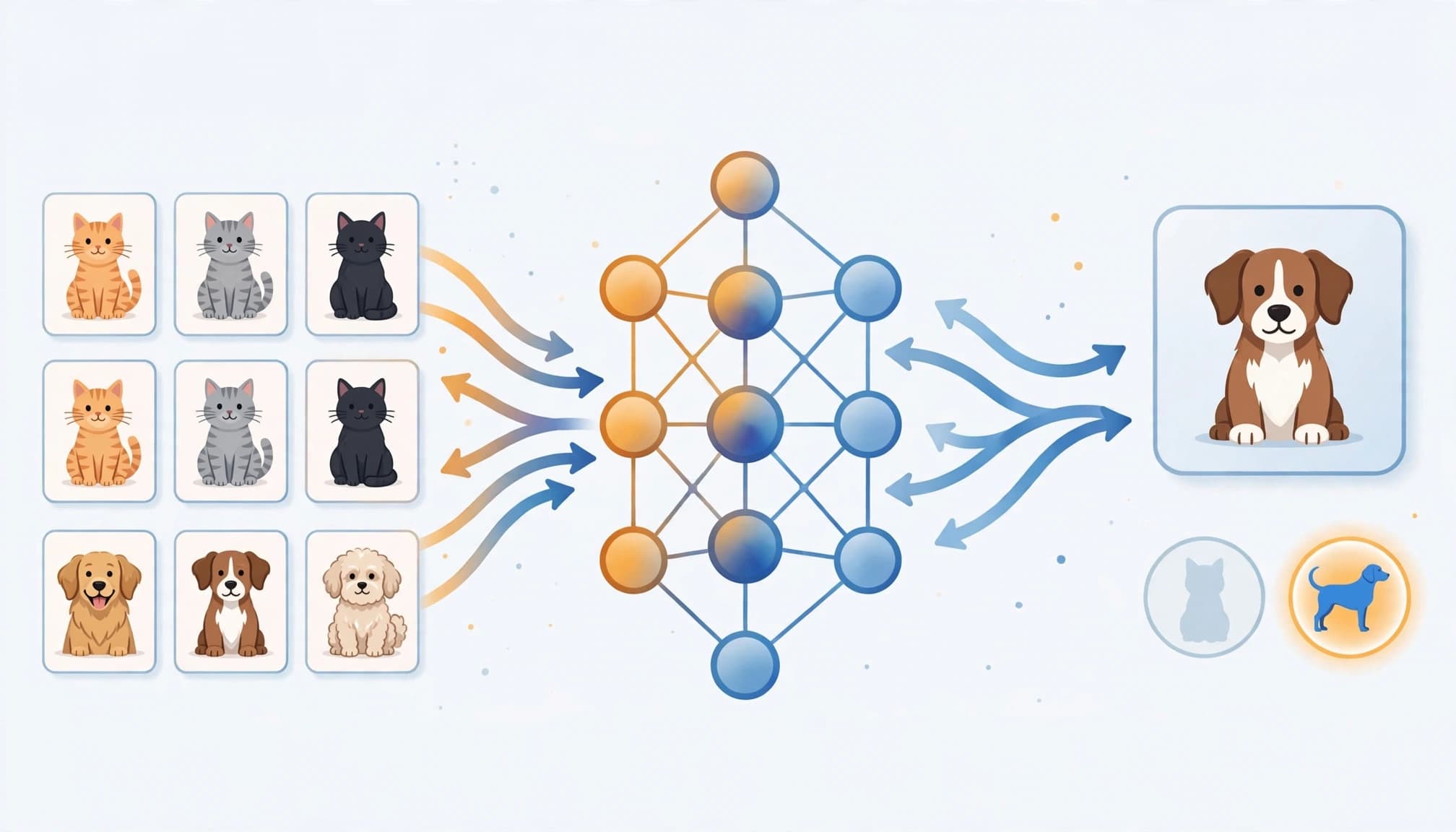
Training and using an AI model are different steps
Training is the process of learning patterns from data. It can require large datasets, repeated calculations, and substantial computing power. Google’s Machine Learning Crash Course explains how models use examples and training methods to learn.
Once training is complete, the model can handle inference, which means applying what it learned to a new input. When you ask a chatbot a question, for instance, it processes your prompt and generates a response based on patterns learned during training. That everyday step usually takes much less time and computing power than training the model.
What happens when you ask an AI tool a question?
When you send a chatbot a prompt, the model converts the text into a format it can process, uses the conversation as context, and generates a response one piece at a time. For example, asking “What is the capital of France?” starts a sequence of calculations, not a human-like act of understanding.
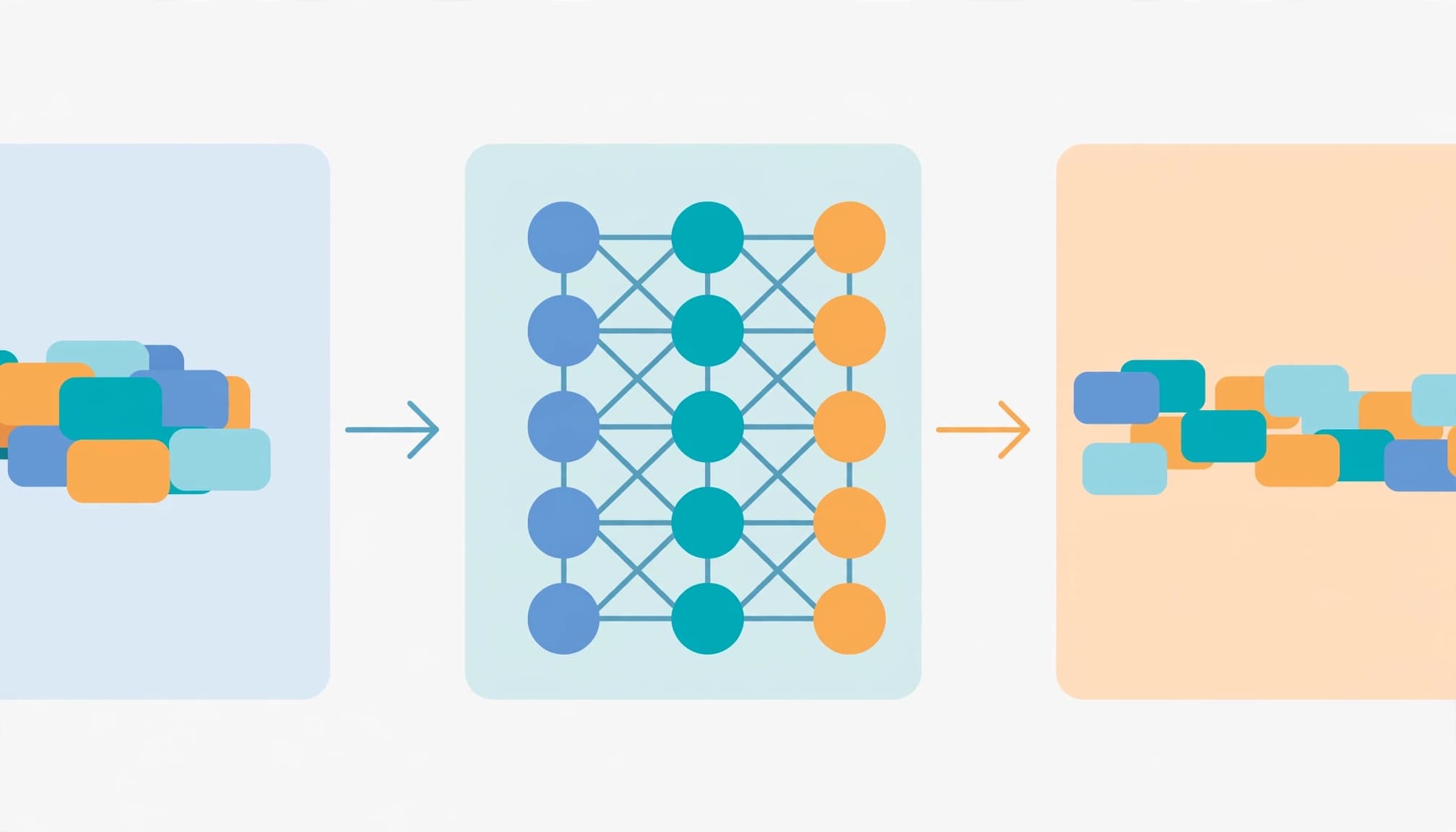
The model turns words into patterns it can process
First, a tokenizer splits the prompt into small units called tokens. A token might be a whole word, part of a word, punctuation, or another text fragment. The Hugging Face tokenizer documentation explains how tokenizers prepare text for a model.
Next, the system converts those tokens into numerical representations. The model processes these numbers alongside the conversation so far, using context to estimate which response fits. In the example, the words “capital” and “France” help shape what comes next.
A language model builds an answer one piece at a time
Many chatbots generate text by predicting a likely next token based on patterns learned during training and the prompt’s context. After producing one token, the model uses the updated text to predict another. It repeats this process until it reaches an ending point.
For the France question, the model might produce “The,” then “capital,” then “of France is Paris.” The exact sequence depends on the model and its generation settings. Because it predicts plausible text rather than checking every claim against a source, a response can sound fluent while still containing errors or made-up details.
Machine learning, deep learning, and generative AI explained
AI is the broad field of building systems that perform tasks associated with human intelligence. Machine learning and deep learning are approaches within AI, while generative AI describes systems that create new content. These terms overlap, but they don’t mean the same thing.
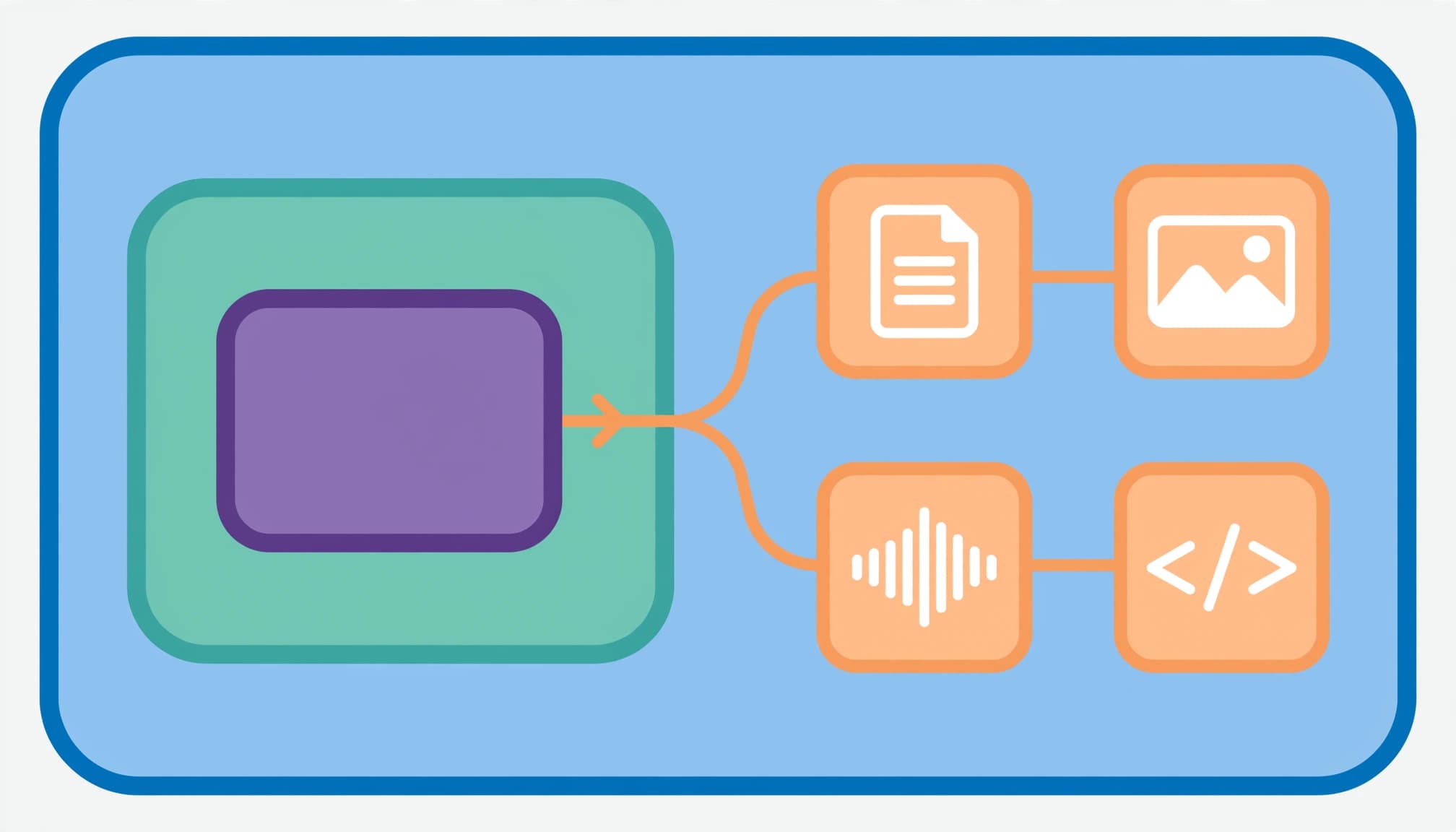
Machine learning finds patterns without hand-written rules for every task
Machine learning lets computers improve at a task by learning from examples. Instead of programming a rule for every case, developers train a model on data so it can identify patterns and use them to make predictions.
For example, a spam filter can learn from emails labeled as spam or legitimate. Over time, it can use patterns in new messages to estimate whether they belong in the inbox or junk folder. Product recommendation systems work similarly, using activity such as past purchases or ratings to predict which items a customer may like. Google’s AI overview describes machine learning as a type of AI that learns from data.
Deep learning uses layers of artificial neurons
Deep learning is a type of machine learning built with neural networks that contain many layers. During training, the network adjusts connections between artificial neurons to detect useful patterns in data.
As a result, deep learning can handle complex inputs such as speech, images, and language. A speech-recognition system, for instance, can learn patterns in audio and map them to words. Deep learning also powers many systems that identify objects in photos or process written prompts.
Generative AI creates new text, images, audio, or code
Generative AI produces new content based on patterns learned from training data. A chatbot can generate a draft response, while an image generator can create a picture from a written prompt. IBM’s explanation of generative AI covers how these systems create content in response to user requests.
By contrast, many other AI systems mainly sort, predict, or label information. A spam filter classifies a message, for example, while a generative model creates a new response. Many generative AI tools use deep learning, but the terms describe different things: deep learning is a training approach, and generative AI describes the kind of output a system produces.
What AI can do well, and where it can go wrong
AI is useful when a task involves finding patterns across many examples or handling repeated work quickly. Its output still depends on the task, the data, and how well the model fits the job.
AI can handle patterns and repeated tasks at scale
For example, AI can translate text between languages, flag unusual activity in financial transactions, summarize long documents, or sort large photo collections by their contents. These systems can process more items than a person could review manually, then help people focus on results that need attention.
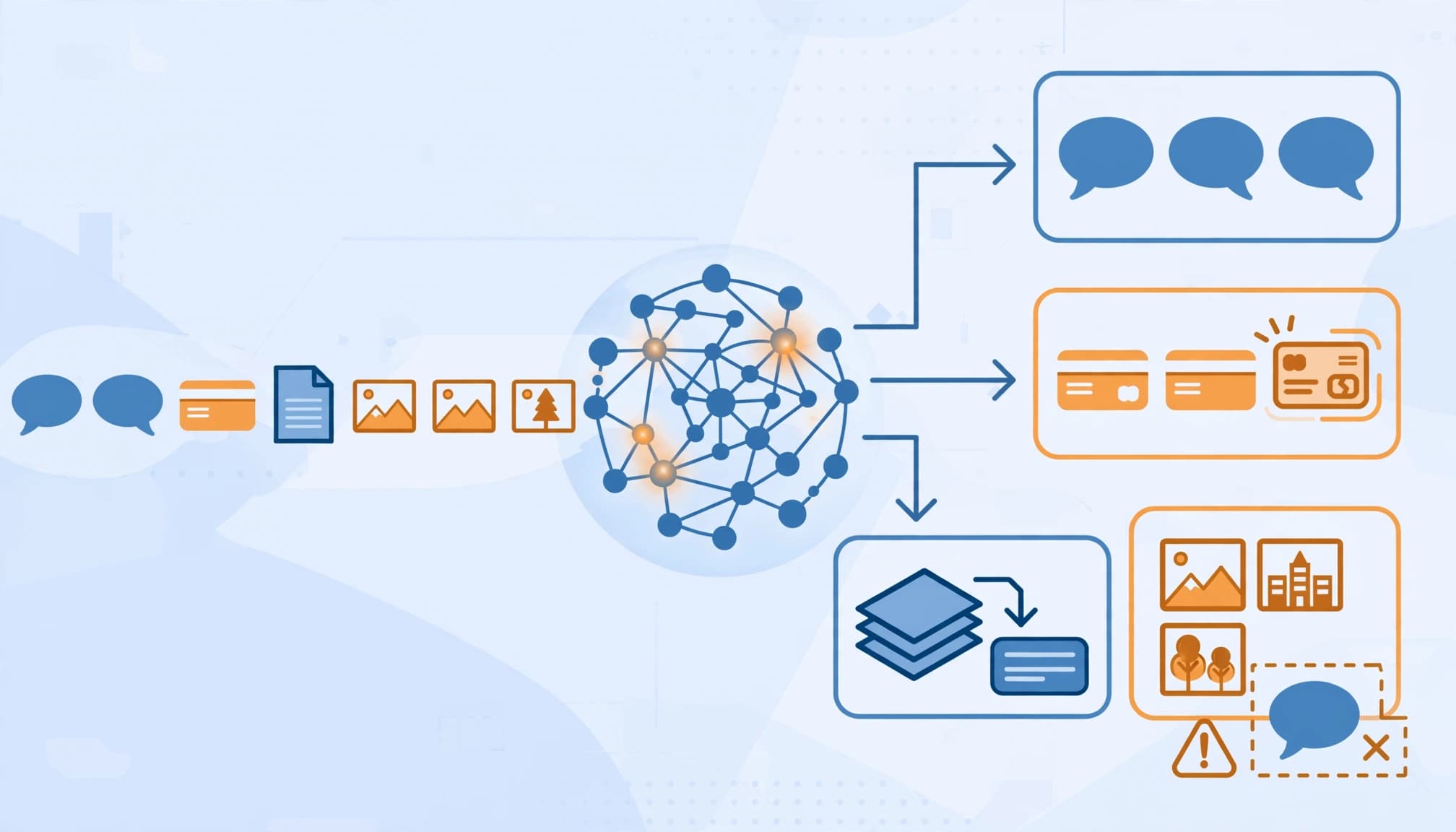
However, performance varies. A translation model may struggle with idioms, while an activity detector may flag a legitimate purchase as unusual. A useful result depends on relevant, representative data and a clearly defined task.
Bias, outdated data, and confident mistakes still matter
If training data leaves out certain groups or contains unfair patterns, a model can repeat those patterns in its results. In addition, an AI system may rely on outdated information or generate an incorrect answer that sounds certain. The NIST AI Risk Management Framework identifies fairness, reliability, safety, and privacy as factors to consider when managing AI risks.
Check important claims against reliable sources, especially when a decision affects health, money, safety, or someone’s rights. Also, avoid entering private or sensitive information into an AI tool unless you understand how the service handles that data.
Conclusion
AI learns patterns from data, then uses them to make predictions or generate outputs. That process explains how AI tools can handle tasks quickly, while also making clear why their answers can be wrong.
Treat AI as a helpful tool, and check its work. For important decisions, use reliable information and your own judgment.