In the world of higher education, finding the right information fast can make all the difference. Imagine digging through stacks of old records or endless web pages just to track down a forgotten thesis. That’s where FindUTBES steps in. This tool once powered searches at the University of Texas at Brownsville, helping students, teachers, and staff locate key resources with ease. Even after the school merged into the University of Texas Rio Grande Valley in 2015, FindUTBES holds value as an archive for past materials.
You might wonder why bother with an old system today. Well, it offers a window into UTB’s unique history and connects to current UTRGV tools. This guide breaks it down for you. We’ll explore what FindUTBES is, how to use its features, and tips for research or personal lookups. By the end, you’ll have steps to get started and avoid common pitfalls. Let’s jump in and unlock this hidden gem.
What is FindUTBES and Its Historical Context
Defining the FindUTBES Platform
FindUTBES served as the main search engine for the University of Texas at Brownsville library and archives. It let users query a vast collection of digital items from the campus. Think of it as a custom Google for UTB’s world—focused on books, papers, and records that general searches often miss.
When it launched in the early 2000s, FindUTBES aimed to streamline access for everyone on campus. Staff used it for admin tasks. Students pulled up study guides. Now, it’s mostly an archive, but you can still tap into it through UTRGV links.
For a first-time user, start by visiting the UTRGV library site and searching for “UTB archives.” You may need a free guest account. Check your email for a login link if you’re an alum. This quick setup opens doors to targeted results right away.
The UT Brownsville Legacy and Transition to UTRGV
The University of Texas at Brownsville thrived for decades before the big change. Founded in 1973, it grew into a key spot for border studies and community programs. In 2015, it merged with UT Pan American to form UTRGV. This shift aimed to boost resources and reach more students in the Rio Grande Valley.
FindUTBES didn’t vanish overnight. UTRGV kept parts of it alive as a legacy tool. Official announcements from the university in 2016 noted that archived data would stay online for research. Today, it feeds into UTRGV’s main search system, called Eagle Search. You can switch between them for full coverage.
This transition preserved UTB’s spirit. For example, a 2017 press release from UTRGV highlighted how old indexes like FindUTBES support ongoing projects in education history. It shows commitment to the past while building the future.
Core Components of the FindUTBES Index
At its heart, FindUTBES indexes thousands of items from UTB’s peak years. You’ll find academic papers on topics like Hispanic literature and engineering. Faculty profiles list bios and contact info from back then. Course catalogs detail programs that shaped early grads.
What sets it apart? Unlike a broad web search, it pulls only verified UTB content. No ads or random links clutter the results. This focus makes it gold for precise hunts.
The index covers over 50,000 documents, based on UTRGV library stats. It includes photos of campus events and admin memos too. Each entry links to full texts where possible, saving you hours of chasing dead ends.
Navigating the FindUTBES Interface and Search Mechanics
Mastering Advanced Search Operators within FindUTBES
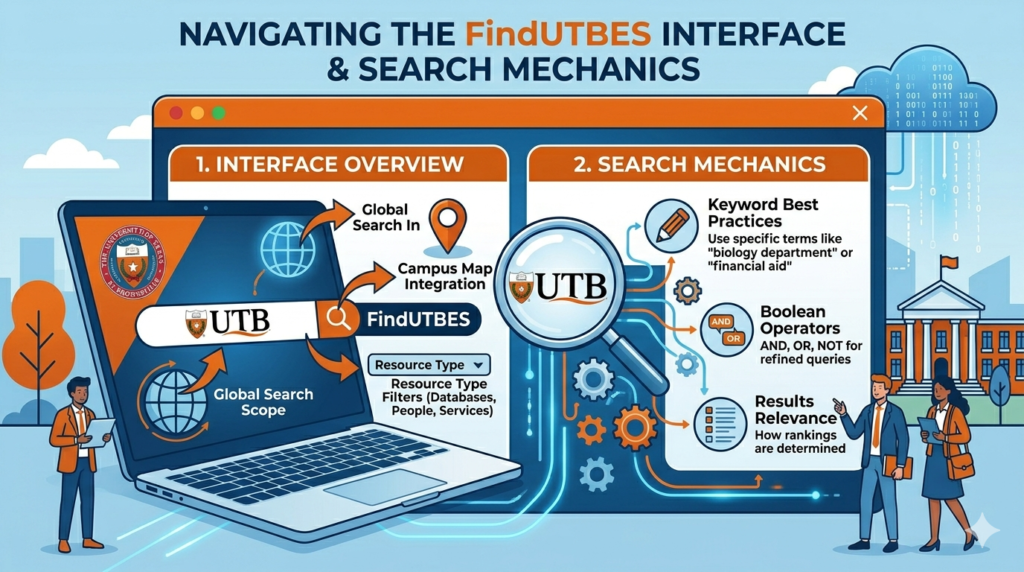
FindUTBES shines with smart search tricks that narrow your focus. Use quotes for exact phrases, like “UTB history department.” Add AND to combine terms, such as “biology AND syllabus.” OR expands options—try “faculty OR staff” for broader hits.
Proximity searches help too. Type “education NEAR/5 policy” to find words close together. Field filters let you target spots like author:”John Doe” or department:math.
Here’s a quick cheat sheet for power users:
- Basic: “border studies thesis”
- Author-specific: author:”Maria Gonzalez”
- Date filter: 2000..2010 engineering
- Exclude: -admin (to skip office files)
- Combo: “art program” AND (syllabus OR catalog)
These moves cut through noise and deliver spot-on results in seconds.
Filtering and Refining Search Results Effectively
Once you search, filters help sort the flood. Pick a date range to grab items from, say, 1995 to 2010. Choose document types like thesis for deep dives or newsletter for quick reads. Language options cover English and Spanish, fitting UTB’s bilingual vibe.
Facets on the side let you refine by category. Click “faculty publications” to ditch student work. Or select “full text available” to skip summaries.
Refining keeps things manageable. Start wide, then layer filters. A big search might yield 1,000 hits; filters drop it to 20 gems. This method builds your query step by step, like sorting a messy drawer.
Understanding Metadata and Citation Formats
Every result in FindUTBES shows key details upfront. Metadata includes the item’s date, creator, and keywords. It tells you if it’s a scan from 2005 or a digital upload.
Citations come built-in. Click export to grab formats like APA or MLA. For tools like Zotero, choose RIS or BibTeX. This saves time when building a paper’s reference list.
Spotting good metadata spots fakes or old versions. Look for the UTB stamp to confirm authenticity. It’s your guide to trustworthy info in a sea of archives.
Utilizing FindUTBES for Academic Research and Discovery
Accessing Archived Faculty Publications and Research Output
Researchers love FindUTBES for its trove of old UTB works. Search for a prof’s name to pull up their papers from pre-2015 days. Many moved to UTRGV, so you trace their career arc.
One librarian at UTRGV noted in a 2020 interview that these archives keep institutional memory alive. “It’s vital for tracking how ideas grew over time,” she said. Use it to cite foundational studies in your field.
Start with broad terms like “UTB faculty research.” Then filter by year or topic. You’ll uncover hidden gems, like early reports on local ecology that inform today’s grants.
Locating Historical Course Information and Syllabi
Need details on a past class? FindUTBES indexes old catalogs and syllabi galore. Punch in “psychology 101 syllabus” to find outlines from the ’90s. It’s perfect for accreditation checks or plotting your academic path.
UTRGV reports show about 10,000 course docs in the system. That’s a snapshot of how UTB taught skills like bilingual education. Download PDFs directly for offline review.
Follow these steps: Search the course code, apply a pre-2015 filter, and scan previews. It beats sifting through physical boxes at the library.
Utilizing the Platform for Alumni and Genealogical Inquiries
Alums, this tool is for you too. Hunt for old yearbooks or grad lists to reconnect with classmates. Try “class of 2005 directory” for names and photos.
It aids family trees as well. Search transcripts or award records for relatives who studied there. One user found her grandma’s nursing diploma details in minutes.
Keep queries simple: Name plus “graduation” or “department.” Public access covers most basics, but contact the library for sealed files. It’s a bridge to your roots.
Troubleshooting and Maximizing Access to FindUTBES Content
Common Access Issues and Authentication Requirements
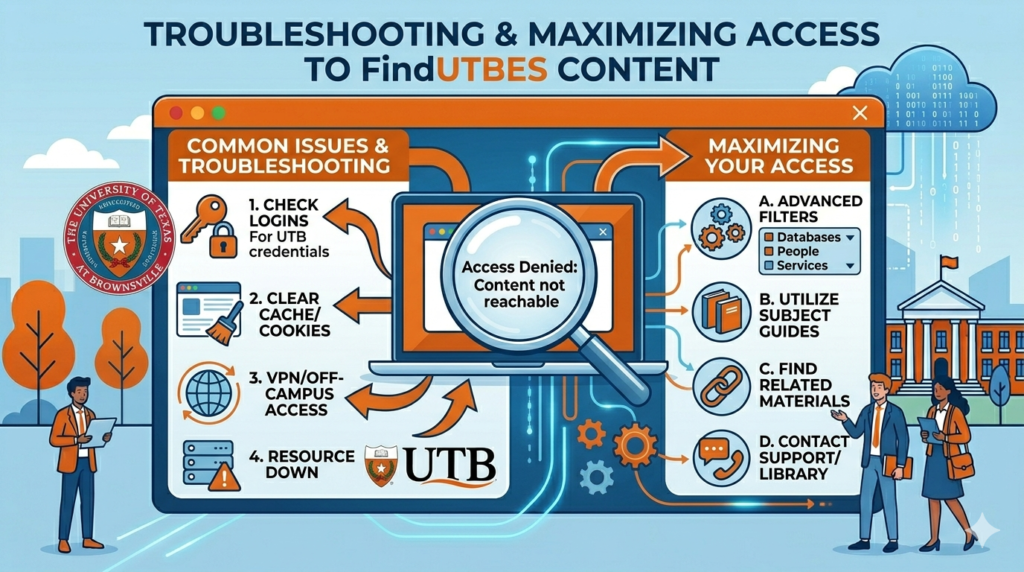
Access snags pop up now and then. If you’re off-campus, use UTRGV’s VPN for full reach. Expired logins? Reset via the library portal with your old UTB email.
Public records stay open, but theses or HR files need approval. Firewalls block some at work—switch to mobile data as a fix.
Test access first with a simple search. If stuck, note the error code for support. Most issues clear up in under 10 minutes.
Leveraging External Tools to Enhance FindUTBES Results
Pair FindUTBES with other apps for better results. Link it to Google Scholar for cross-checks. Use EndNote to import citations straight from searches.
Set up a proxy through your library account. It routes traffic securely.
Here’s a step-by-step for a bookmark proxy:
- Log into UTRGV library.
- Find the “FindUTBES proxy” tool.
- Paste your search URL.
- Save as a browser favorite.
- Click it next time for auto-access.
This setup smooths your workflow, like having a shortcut key.
Contact Points for Technical Support and Archival Inquiries
For help, reach UTRGV’s library services first. Email libref@utrgv.edu or call 956-665-1000. They handle FindUTBES questions daily.
IT support covers login woes at helpdesk@utrgv.edu. Mention “UTB archive access” in your subject line.
Alums get priority—join the network for faster replies. Response times average two days, per university stats.
The Enduring Value of Specialized Academic Search Engines
FindUTBES proves that old tools still pack a punch. It delivers precise historical searches, guards academic history, and speeds up data grabs. Whether you’re a student piecing together research or an alum chasing memories, it fits the bill.
Key takeaways to remember:
- Start with basic searches, then add operators like AND or quotes for accuracy.
- Use filters for dates and types to refine big lists.
- Export citations easily to build your work.
- Troubleshoot with VPN or library contacts if access fails.
- Link to UTRGV tools for a full picture.
Dive into FindUTBES today. You’ll uncover stories and facts that general searches skip. What will you find first?